Sub-Zero serviceIce makers
Sub-Zero ice makers that stall, leak or turn out poor cubes
Ice is nothing more than water and time. When a Sub-Zero ice maker stops filling the bin, turns out cloudy or undersized cubes, or wets the floor below it, the fault sits somewhere on a short route between the shutoff valve and the drain, and we walk that route one stop at a time.
4.9 of 5 · 187 client reviews How we are rated
An empty bin, answered briefly
Why did my Sub-Zero ice maker stop making ice?
Most often water is not reaching the mold: a closed or kinked supply line, a clogged filter, or a water inlet valve that no longer opens. Next on the list are the controls and the bin sensor, which can report a full bin that is actually empty. A freezer running warm also stalls production, so temperature is the first thing we read.
Cube by cube: shape, size and taste
Before anyone removes a grille, the ice itself and the floor around the unit narrow the search considerably. This is how we read the signs owners describe on the phone.
- Bin is dry and nothing drops
- Supply shut or restricted, a filter clogged with sediment, or an inlet valve whose coil has failed
- Cubes look cloudy or taste flat
- Dissolved minerals in the water, a filter past its service life, or cubes released before they freeze through
- Cubes come out small, thin or hollow
- Low household water pressure or a partly blocked filter that under-fills each cycle
- Ice spills over the bin or jams the door
- A shut-off arm or bin sensor knocked out of position, so production never pauses
- White crust on cubes or inside the machine
- Scale on the evaporator plate of a freestanding ice machine, slowing every freeze
- Cubes welded together into a lump
- Partial melting and refreezing, usually from a freezer section that drifts warm Related service
- A wet patch on the floor by the toe kick
- A seeping fill tube, a cracked fitting, or a drain that has slowed or backed up Related service
Why is the ice from my Sub-Zero cloudy?
Milky cubes are caused by dissolved minerals and air locked inside as the water freezes, and they get worse when the filter is overdue or the cubes are harvested before they are frozen solid. A fresh cartridge clears it in many kitchens. If the ice stays milky with a new filter in place, the freeze cycle or the water pressure needs a technician.
Seven stops between the valve and the bin
Every Sub-Zero ice maker, whether it lives inside a built-in refrigerator or stands alone under a counter, follows the same route. We test each stop in this order, and each note says what an owner can safely check before we arrive.
-
Supply and pressure
Water arrives from a household line through a shutoff valve behind or beneath the unit. A half-closed valve, a tube pinched during a cabinet project, or weak house pressure all show up as small cubes or none at all. You can confirm the valve is fully open; we measure the actual flow.
-
Filter
The cartridge removes sediment and much of the off-taste. As it loads up it slows the flow, so a tired filter can starve the ice maker long before anything else fails. Swapping it is an owner task; on our visit we make sure the housing seats properly and does not weep.
-
Water inlet valve
An electric valve opens for a timed fill. If its coil burns out or debris holds it shut, the mold stays dry; if it sticks open, the result is overflow or a frozen fill tube. This one is ours to replace, because it sits on live wiring and a pressurized line.
-
Mold or evaporator plate
In a built-in, water freezes in a mold inside the freezer compartment. In a freestanding ice machine it runs over a chilled evaporator plate. Mineral scale on either surface, or a freezer that will not hold its setting, means slow, soft and cloudy ice.
-
Harvest
When the cubes are ready, the ice maker warms the mold slightly and ejects them, or the plate releases its sheet. A harvest that fires early sends out wet, thin ice; one that never fires leaves a frozen mold above an empty bin.
-
Bin sensor
A shut-off arm or an optical sensor stops production when the bin is full. Nudged by a scoop or a stray bag, it either halts the ice maker too soon or lets it overfill. Clearing anything that rests against the arm is safe to try yourself.
-
Drain
Freestanding ice machines melt a little ice on purpose and send that water to a floor drain or a pump. A sluggish drain leaves standing water, then odors, then a leak across the floor. Flushing and clearing that line is part of our visit.
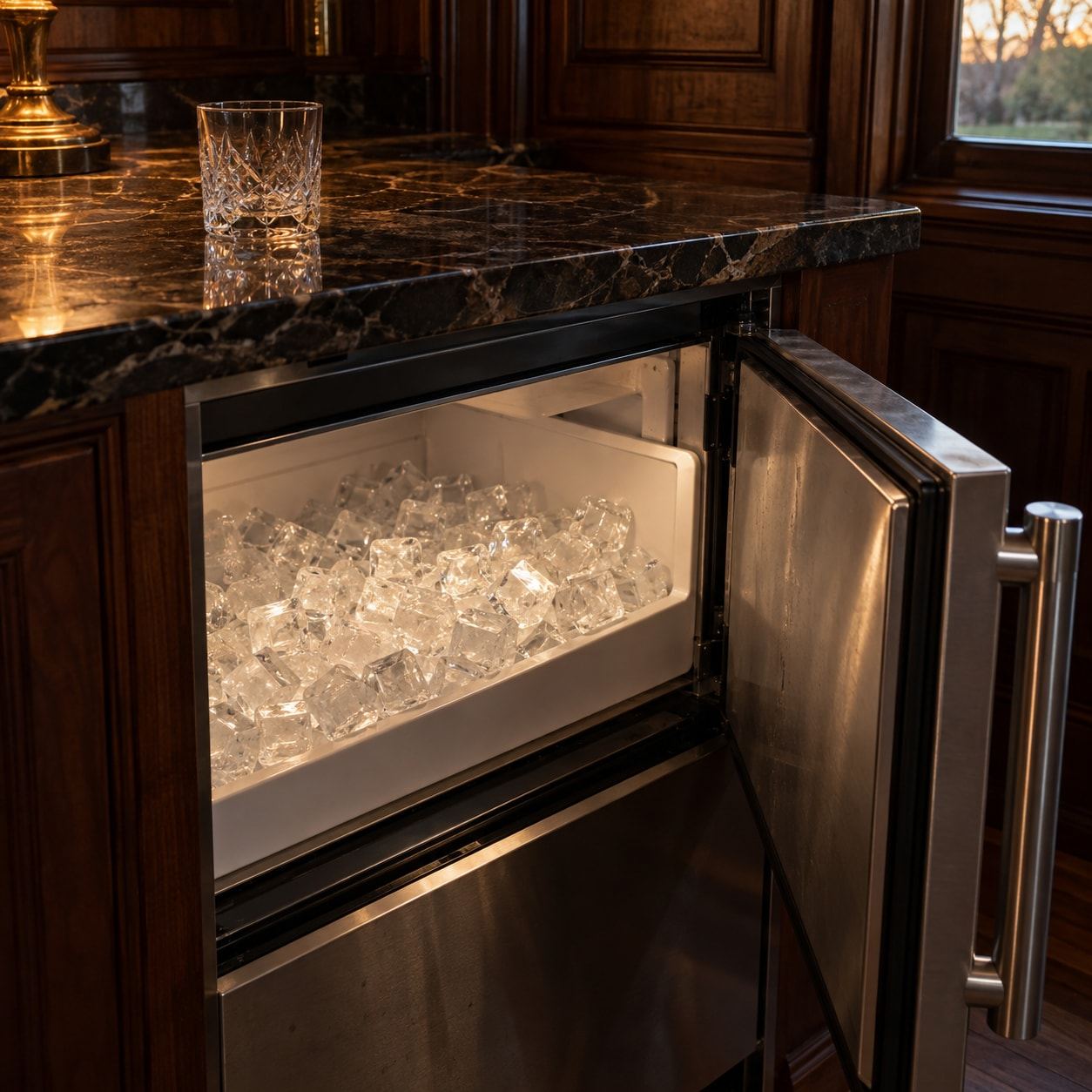
Built-in ice maker or freestanding machine: where we look
Sub-Zero makes ice in two ways: with an ice maker inside the freezer section of a full-size refrigerator, and with a dedicated undercounter ice machine. The parts overlap, yet the visit is not the same. Beverage centers and refrigerator drawers are covered on our undercounter service page.
| Part of the system | Ice maker in a built-in refrigerator | Freestanding undercounter ice machine |
|---|---|---|
| Water supply and filter | Line and cartridge shared with the refrigerator | A line of its own; the filter location depends on how the unit was plumbed |
| Where ice forms | A mold inside the freezer compartment | A chilled evaporator plate, inspected and descaled |
| Source of cold | The freezer section's own refrigeration system | A compressor and condenser built into the machine |
| Condenser care | Handled with the refrigerator's routine service | Essential: dust in a tight undercounter bay slows every freeze cycle |
| Drain | No separate drain for the ice maker itself | Drain line or pump inspected, flushed and cleared |
| Typical complaints | No ice, shrinking cubes, clumping | Scale, slow production, water on the floor |
Ice advice worth questioning
-
HeardCloudy ice means the ice maker is broken.
In practiceUsually it points to the water or the filter. Clarity depends on minerals, dissolved air and how completely each cube freezes. Replace an overdue cartridge first, and call us if the cloudiness stays.
-
HeardIf the freezer is cold, the ice maker cannot be the problem.
In practiceA freezer can hold its setting perfectly while the inlet valve, the harvest cycle or the bin sensor has quit. Keeping food frozen and producing ice are related jobs, but separate ones.
-
HeardA small puddle under the ice machine can wait.
In practiceWater near hardwood and cabinet bases does its damage quietly. Close the shutoff valve feeding the appliance, dry the area, and phone us; someone answers 24/7.
-
HeardDumping the first ice after a filter change is just superstition.
In practiceEarly fills after a new cartridge can carry fine carbon particles and extra air. Discarding the first batches is standard practice and costs nothing but a little patience.
How often should a Sub-Zero water filter be changed?
Count on a fresh cartridge somewhere between six and twelve months, toward the shorter end with hard water or heavy entertaining. A loaded filter slows the flow and starves the ice maker before it fails completely, so when cubes shrink or production drops, the filter date is the first thing to check.
Before you call about the ice
- Can I keep using my refrigerator while the ice maker is down?
- Yes. Making ice and keeping food cold are separate functions. If the freezer temperature is steady, your food is fine. Switch the ice maker off at its control so it does not keep cycling against a dry line, then book a visit.
- Do you service freestanding Sub-Zero ice machines as well as built-in ice makers?
- Yes, both. For built-ins we work on the ice maker inside the freezer section; for undercounter ice machines we also check the compressor, the condenser and the drain, since those units carry their own refrigeration.
- What should I do if water is leaking from my ice maker?
- Close the valve on the line feeding the appliance, soak up what you can and lay towels along the cabinet base. If water has reached an outlet or any wiring, cut power to that circuit at the panel and keep your hands dry. Our emergency page covers the rest.
- How much does an ice maker repair cost?
- Our trip charge is $89. It is billed once for the visit, whether we look at one Sub-Zero or several, and it comes off the repair bill if you go ahead. The repair price itself depends on which part failed, so the technician quotes it on site after inspection, before touching anything. More on our pricing page.
- Will my ice maker keep up when we host a big party?
- A healthy Sub-Zero refills steadily, not instantly, so heavy hosting can outrun any home ice maker. If a large gathering is coming, have the system checked well beforehand. Our article on preparing an estate kitchen for the holidays covers the timing.
- Is it safe to defrost or reset the ice maker myself?
- Making sure the ice maker's switch is on, the supply valve is open and the bin arm moves freely is perfectly safe. Chipping ice off with tools, pulling the ice maker out of the freezer or opening the back of a freestanding machine is not, because wiring and refrigerant lines sit right there.