Sub-Zero serviceSeasonal care
Seasonal care for Sub-Zero refrigeration, timed to Illinois weather
A built-in refrigerator lives through every season the house does. Seasonal care simply means booking an ordinary visit just before your Sub-Zero is about to work its hardest, and dealing with small wear before it becomes a warm freezer in the middle of a heat wave.
4.9 of 5 · 187 client reviews How we are rated
Why the date on the calendar beats the age of the unit
Kitchens in the western suburbs swing between two extremes. In July, humid air rushes in every time a door opens and the compressor runs long against a warm room. In January, forced-air heat dries the house until door gaskets stiffen and stop sealing cleanly. A Sub-Zero handles both, but the parts doing the handling, the condenser, the gaskets, the fans and the defrost drain, wear at whatever pace the weather sets.
So our maintenance visits are organized around the months ahead rather than a fixed routine repeated without thought. The technician starts with whatever the coming season will stress: airflow before summer, seals before winter, steady temperatures before holiday hosting. One thorough visit a year is the baseline. Homes that keep wine in an unconditioned room, or that run several units, may want a second one in autumn.
Plenty of houses in Hinsdale and the neighboring towns run more than one Sub-Zero: a main refrigerator, a freezer column, a wine unit in the dining room, an undercounter drawer in the butler's pantry. A single visit covers all of them under one trip fee. For a month-by-month view of what to watch between visits, read our seasonal maintenance calendar.
Four seasons in the life of one refrigerator
What each part of the Illinois year does to a Sub-Zero, and what is worth checking at that point.
-
Spring
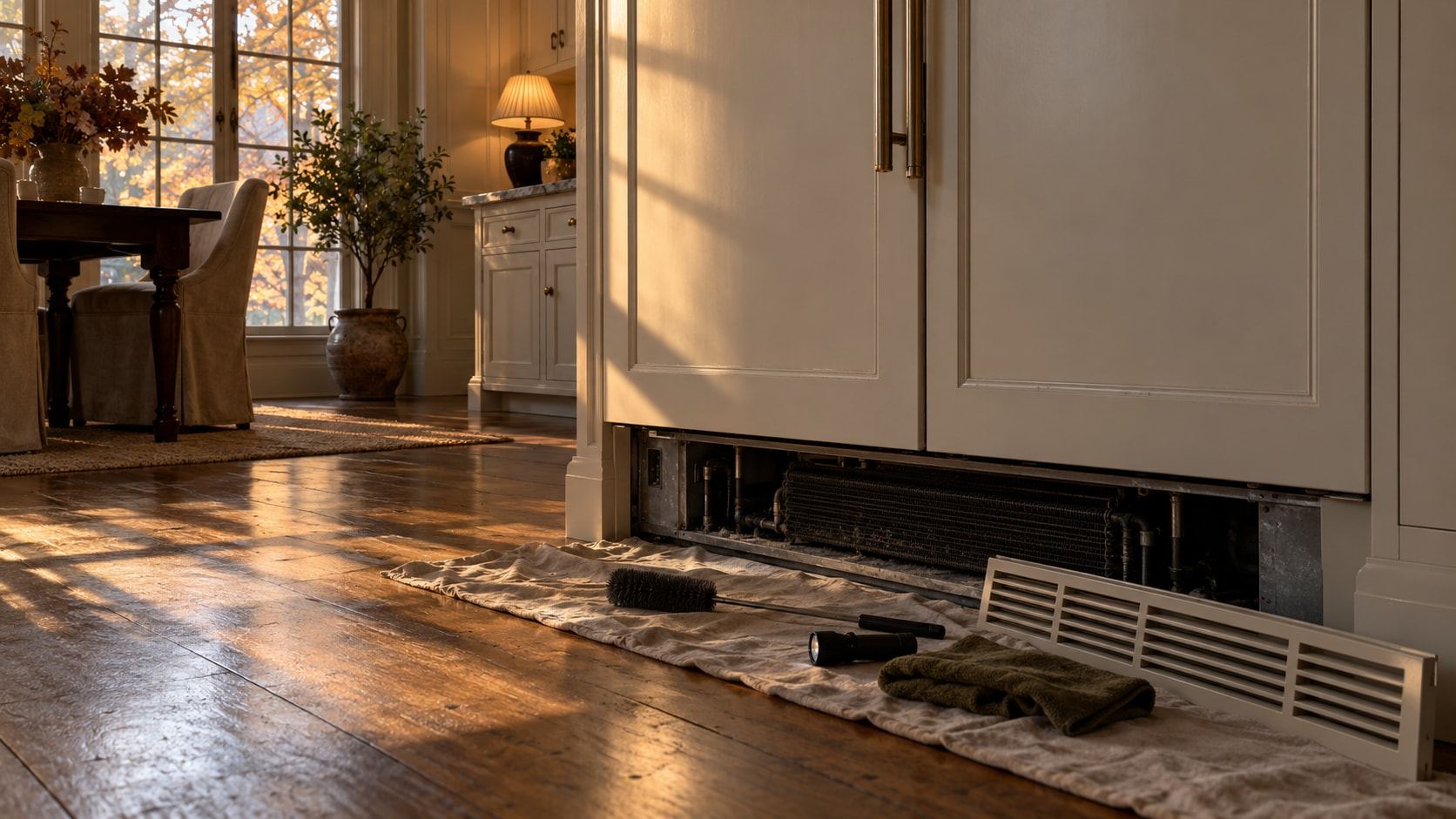
Winter leaves lint, pet hair and furnace dust packed into the condenser coil. Spring is the moment to clear it and to examine gaskets that dried out over the heating months, before the first warm week puts the compressor under real load.
-
Summer
Peak demand. Muggy air, constant door openings for guests and warm rooms keep the system running longest now. Wine units on porches, in lower levels or in pool houses without air conditioning feel it first; see wine cellar care.
-
Autumn
The furnace comes on and the kitchen changes character: warmer near the registers, drier everywhere. It is also the run-up to holiday cooking, when freezers fill and doors swing open all day. Zone temperatures get calibrated and the ice maker is checked for pace.
-
Winter
Dry air shrinks and hardens gasket rubber, so a door that sealed in October can leak cold by February. Units on an exterior wall or beside a busy back door see the widest swings. Frost lines and beads of moisture at the door edge are the warning signs.
When should I schedule Sub-Zero maintenance?
Book at least one full service a year, ideally in spring, after winter dust has settled on the condenser and before summer heat loads the compressor. Houses with wine storage in unconditioned rooms, or with several units, benefit from a second visit in autumn, ahead of furnace season and holiday entertaining.
What a seasonal visit covers
The order shifts with the season; the list does not. Every Sub-Zero in the house gets the same attention during the one visit.
- Condenser coil cleaned and airflow through the grille confirmed
- Door gaskets inspected around the full perimeter for drying, tears and gaps
- Fresh-food, freezer and wine zones measured and compared with what the controls are set to
- Defrost drain and drain pan checked for slow flow, odor or standing water
- Water filter date noted and the housing checked for seepage
- Ice maker fill, harvest and bin sensor tested
- Fans, hinges and door closers listened to and adjusted where needed
- A summary of what we found and what may need attention next, before we leave
Should a Sub-Zero condenser be cleaned in spring?
Spring is the right time. Through the heating season the condenser coil gathers dust, lint and pet hair, which makes the compressor run longer just as warm weather arrives. A clean coil restores airflow. Owners can vacuum the grille between visits; a full cleaning of the coil itself is part of our service call.
How seasonal visits are billed
Booked and billed like any visit
A seasonal visit is booked like any other service call: the trip costs $89, a single charge for that visit whether we check one Sub-Zero or five, and that amount goes toward any repair you approve. What the work itself costs is quoted once the technician has inspected the unit, and nothing starts without your yes.
- One $89 charge per visit, not per appliance
- Book each visit when it suits you, by phone or online
- Our pricing page explains how a repair quote is built
How does Chicago summer humidity affect a built-in refrigerator?
Humid air brings moisture in every time a door opens, and the system has to remove it, while a warm kitchen keeps the compressor running longer. Worn gaskets let in more damp air still, which shows up as condensation on the door edge and frost inside. Clean coils and tight seals before July keep a Sub-Zero well away from its limit.
Seasonal care, as owners ask about it
- How is a seasonal visit different from a regular repair call?
- The billing is identical: $89 for the trip, exact cost after inspection. The difference is purpose. A repair call chases a fault; a seasonal visit hunts for wear before it becomes one, with the next few months in mind. If we find a part failing, we explain it and quote it before touching anything. For a unit that is already struggling, see refrigerator restoration.
- We have four Sub-Zero units in the house. Is that four visits?
- No. One trip takes in the whole household of Sub-Zero units, main refrigerator, freezer column, wine storage and undercounter drawers alike, and the $89 is billed a single time. Mention the count when booking so the technician plans a long enough slot. Questions before booking can go through our contact page.
- What if something breaks between seasonal visits?
- Call as you would for any breakdown. Someone picks up the phone 24/7; technicians are on the road daily, 8 AM–6 PM. After dark we help over the phone: keep the doors closed to protect the food, shut the water valve if something leaks, and we set up the earliest daytime slot.