Sub-Zero serviceUndercounter and beverage
Sub-Zero undercounter units, judged by where they live
An undercounter Sub-Zero does a full refrigerator's job inside a cabinet opening the size of a drawer stack. Many problems with these units start in the space around them — heat from the neighbors, a warm floor, a covered grille — so we diagnose the installation along with the machine.
4.9 of 5 · 187 client reviews How we are rated
Not cold enough under the counter
Why is my Sub-Zero undercounter refrigerator not cold enough?
The most common reasons are the surroundings rather than the unit: a blocked or dusty grille at the base, warm air from a neighboring appliance, or a heated floor beneath it. After those come a leaking door gasket, a weak fan and a thermostat or control drifting. Check the grille first, then book a diagnosis if the temperature does not recover.
Look around the unit before anything else:
- Grille at the base is open — no rug, toe-kick trim, stored bottles or a pet bed in front of it
- Dust and lint have not matted the grille or the condenser behind it
- No heat source next door: the steam vent of a dish machine, the side wall of a cooking appliance or a warming drawer
- The floor under the unit is not radiant-heated, or the heating has not just been turned up for the season
- The door closes flush and the gasket is not folded or torn
- Nothing inside is stacked against the rear wall where cold air circulates
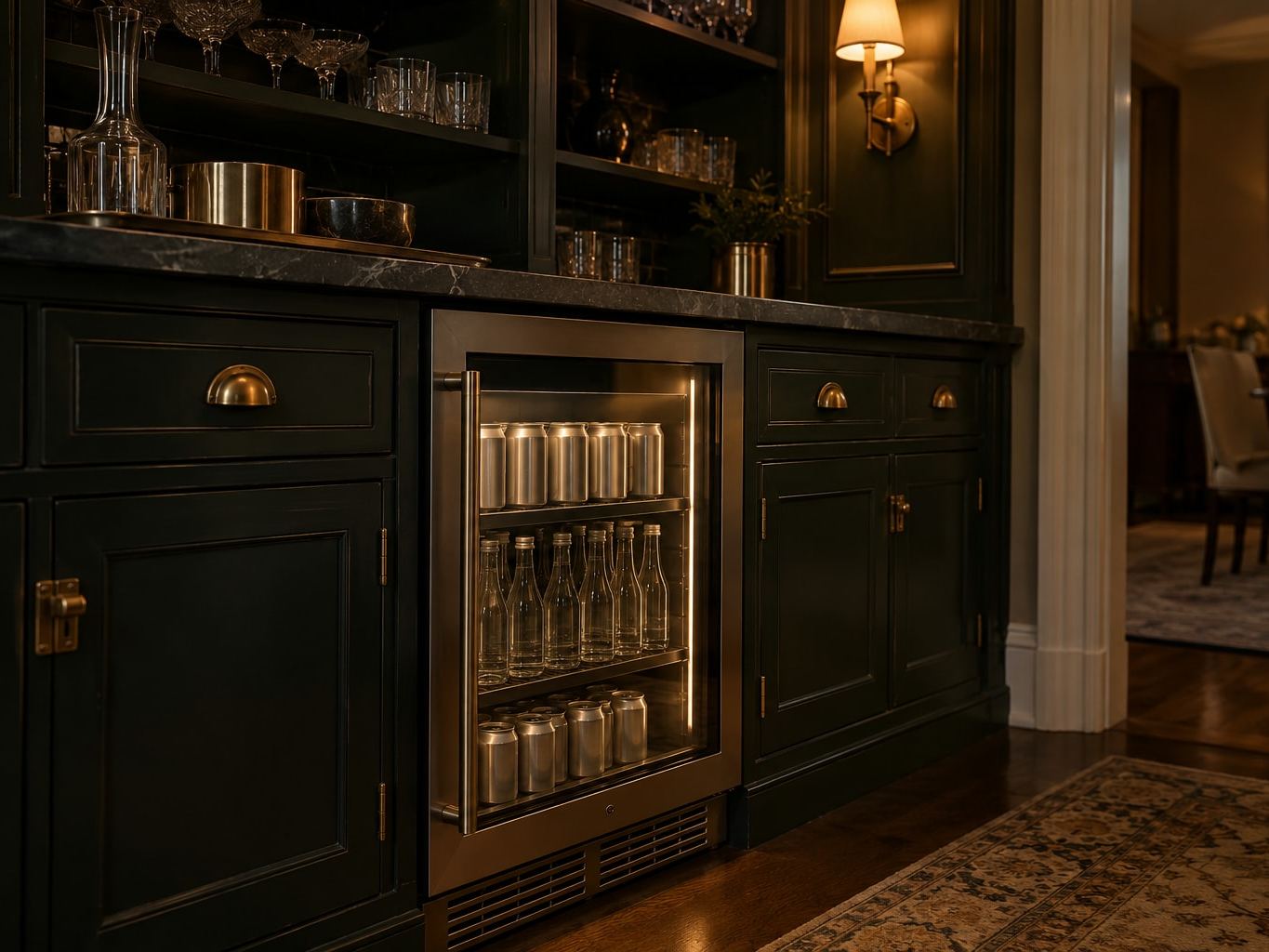
Small cabinet, crowded neighborhood
A full-size built-in has room around it to move heat. An undercounter Sub-Zero does not: it sits tight against cabinetry on both sides, under a stone or wood top, and often next to something that runs hot. It handles that well as long as the air path at the front stays clear. When that path is partly blocked, or the cabinet next to it is warm, the unit works longer, the condenser runs hotter and the temperature inside creeps up even though nothing has technically failed.
That is why a visit for an undercounter unit includes the installation. We measure temperatures inside, but we also look at the grille, the toe-kick, what is next door and what is under the floor, and we compare how the unit behaves with the space around it. Sometimes the fix is a part; sometimes it is a change in the surroundings that we explain and you decide on. For airflow problems in tight older kitchens, our article on ventilation in Tudor homes shows how built-ins are given room to breathe.
Working under a counter also means working close to finished surfaces. Countertops, cabinet faces and floors are covered before we begin, and if the unit has to be slid out of its opening, the floor is protected first and the unit goes back level and square.
Does an undercounter refrigerator need ventilation space?
A built-in Sub-Zero undercounter unit is designed to sit flush in cabinetry, so it does not need open air on every side. What it does need is a clear path at the grille along the bottom front, because that is where it takes in and releases air. Keep that grille uncovered and clean; the exact clearances for your model are in its installation guide.
Trouble signs in bars, pantries and suites
Undercounter units tend to fail quietly, because nobody opens a bar refrigerator as often as the kitchen one. These are the signs owners usually notice first.
- Drinks are cool, not cold, and get worse during a party
- The unit is near its limit: dusty condenser, blocked grille or a heat source next door; frequent door openings push it over
- A puddle at the toe-kick or water pooling inside at the bottom
- Condensate drain blocked or the drain pan out of place; less often a door seal letting humid air in
- The door does not close on its own or leaves a gap at one corner
- Hinge out of adjustment, a gasket losing its shape, or a panel heavier than the hinge was set for
- Control panel unresponsive, beeping or showing an alert
- Control board, display or a connection that has loosened; sometimes a sensor reporting a real temperature problem
- Undercounter wine unit drifting between zones
- Wine-specific checks — calibration, humidity, vibration Related service
- Undercounter ice maker slow or producing cloudy ice
- Water supply, filter or the ice maker's own cycle Related service
Kitchen and bar versus pantry, pool house or suite
Where the unit lives changes how it is used and what usually goes wrong with it.
Kitchen island or bar
- Opened often, especially when entertaining — gaskets and hinges wear first
- Close to other appliances that give off heat
- Problems get noticed quickly because the unit is in daily use
- Grilles collect kitchen dust and get blocked by stools and mats
Butler's pantry, pool house or master suite
- Opened rarely, so a slow temperature drift can go unnoticed for weeks
- Room temperature may swing more than in the main kitchen
- A quiet location makes new noises easier to hear
- Drain and condensation issues can sit unseen on a floor nobody checks
Kitchen units mostly need attention to wear; remote units mostly need someone to look at them regularly. An annual check suits both.
Why is my Sub-Zero beverage center not cooling?
A Sub-Zero beverage center that stops cooling usually has a blocked or dirty grille, a door that is not sealing, or heat from nearby equipment pushing it past what it can handle. If the fan has stopped or the compressor is not starting, that points to a part. Clear the grille, keep the door closed and book a visit.
Bar, pantry and pool-house questions
- How does the installation location affect an undercounter Sub-Zero?
- Strongly. Heat from appliances next to it, a radiant-heated floor, a cabinet that blocks the grille or a room that gets hot in summer all make the unit work harder. So the diagnosis covers the space, not only the appliance.
- How often should an undercounter unit be serviced?
- Once a year works for most homes. Units in rarely used rooms benefit from that annual check the most, because small problems there can run for a long time before anyone notices.
- Will you protect my stone countertop and wood floor?
- Yes. Countertops, cabinet faces and the floor in front of the unit are covered before any work starts. If the unit needs to come out of its opening, it is slid out on protection and reinstalled level.
- Do you have to pull the unit out of the cabinet?
- Often not — a good share of the testing and many repairs can be handled from the front, working through the base grille and the cabinet interior. When removal really is needed, you hear the reason before the unit moves.
- I have three undercounter units in different rooms. Is each one a separate charge?
- No. You pay $89 once for the trip, so the bar, pantry and pool-house units can all be looked at together. That amount is deducted from repair work you sign off on, and each repair is quoted after diagnosis — see pricing.
- How do I describe the problem when I call?
- Tell us where the unit is, what kind it is — refrigerator, beverage center or wine — and what you have noticed, including when it started. Phone and online booking details are also on the contact page.