Sub-Zero serviceWine columns and cellars
Sub-Zero wine storage care for collections that dislike surprises
Wine forgives a warm afternoon far less than milk does: it is the repeated swings, not one bad day, that age bottles faster than you intended. We check what a Sub-Zero wine unit is really holding in each zone, and how its seal, glass, compressor and surroundings affect that number.
4.9 of 5 · 187 client reviews How we are rated
Stability is the whole job
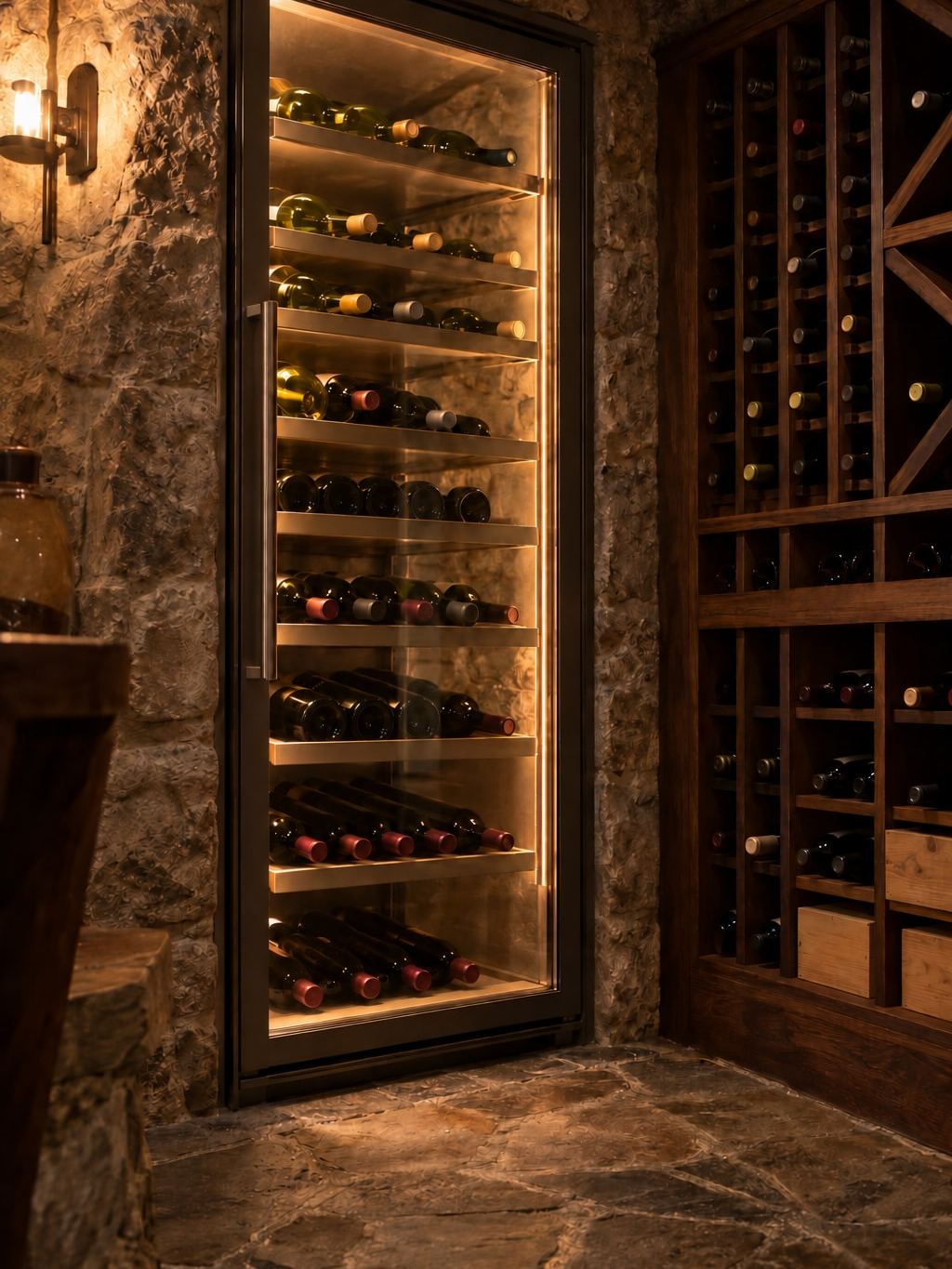
A Sub-Zero wine unit is built around steadiness. Two independently controlled zones, a compressor mounted to damp vibration, glass that filters ultraviolet light and a door that seals tight all serve one aim: to keep the bottles in conditions that barely change from week to week. When any one of those pieces wears, the display often keeps showing the set temperature while the air inside wanders.
That is why our visit starts with independent readings, not with the control panel. A calibrated thermometer placed among the bottles in each zone, a hygrometer on the shelf and time to watch the unit cycle tell us what the wine actually experiences. Then we compare that with what the unit believes. A gap between the two is often the first concrete clue.
We work on every Sub-Zero wine format we see in the area: undercounter units in kitchens and bars, full-height wine columns, and larger built-in preservation installations in dedicated cellar rooms. The approach is the same; access is what changes.
Readings that drift
Why is the temperature in my Sub-Zero wine storage fluctuating?
Fluctuation in a Sub-Zero wine unit usually comes from one of four places: a compressor losing capacity, a sensor or control drifting out of calibration, a door gasket or hinge letting room air in, or insulation and surroundings working against it. A unit in a room that heats up or cools down sharply will also swing. Independent readings in both zones show which one it is.
Two zones, two targets
These are the general storage ranges we calibrate against. Within them, the right setting is your choice and depends on what you collect and when you plan to open it.
| Condition | Typical target | What we verify |
|---|---|---|
| Red wines | 55–65°F | Actual air temperature among the bottles against the zone setting, over more than one cycle |
| White and sparkling wines | 45–55°F | The same, plus that the colder zone does not pull the warmer one down with it |
| Humidity | 50 to 80 percent relative | Hygrometer reading on the shelf; corks dry out when it runs too low |
| Light | As little as possible | Condition of the UV-filtering glass and its seal; interior lights switching off when the door shuts |
| Vibration | None you can feel | Compressor mounts, unit leveling, and contact between the cabinet and nearby surfaces |
What temperature should red and white wine be in a dual-zone Sub-Zero?
As a general storage guide, keep reds in the 55–65°F range and whites and sparkling wines in the 45–55°F range. A dual-zone Sub-Zero lets you hold both at once. What matters more than the exact figure is that each zone stays steady, so we check the real temperature among the bottles rather than trusting the display.
Early warnings from the cabinet
- The zone reading moves several degrees during the day
- Compressor wear, a thermostat or sensor drifting, or a seal letting room air in when the door is closed
- The compressor runs noticeably longer than it used to
- Dust on the condenser, a blocked grille, a warm room or a gasket that leaks; less often, a refrigerant problem
- Labels feel damp or there is condensation on the glass
- Humidity higher than it should be, a drain line not clearing, or the door not closing square
- Corks look dry or have begun to shrink
- Humidity running low inside the unit, often worse in a dry Illinois winter
- A hum you can feel through the shelf
- Compressor mounts worn or the unit no longer level; vibration that reaches the bottles is worth fixing
- The door swings, sags or leaves a visible gap
- Hinge adjustment, a gasket losing shape, or a heavy panel pulling the door out of line
- Interior light stays on, flickers or will not come on
- Door switch, lighting module or control; a light that stays lit also adds heat to the cabinet
Wine units in rooms that are not climate-controlled
Unheated and un-air-conditioned spaces
A Sub-Zero wine unit in a basement cellar room, a three-season porch or a pool house works against whatever that room is doing. In a humid summer the compressor runs long; in a cold winter the warmer zone can struggle to hold its setting. If your unit lives in a space like this, tell us when you book.
- Keep the grille and the space around the unit clear of cases and boxes
- Do not cover the unit or wrap it to protect it from cold
- Note the room temperature when you see the reading drift; it helps the diagnosis
A compressor that never seems to rest
Why is my Sub-Zero wine cooler running all the time?
A wine unit that runs almost constantly is struggling to shed heat or is losing cold. Common reasons are a condenser coated in dust, a blocked grille, a warm room, a door gasket or hinge that leaks, or an interior light that stays on. If none of those explains it, the compressor or the refrigerant circuit needs a closer look.
What cellar owners want to know
- Does vibration really affect stored wine?
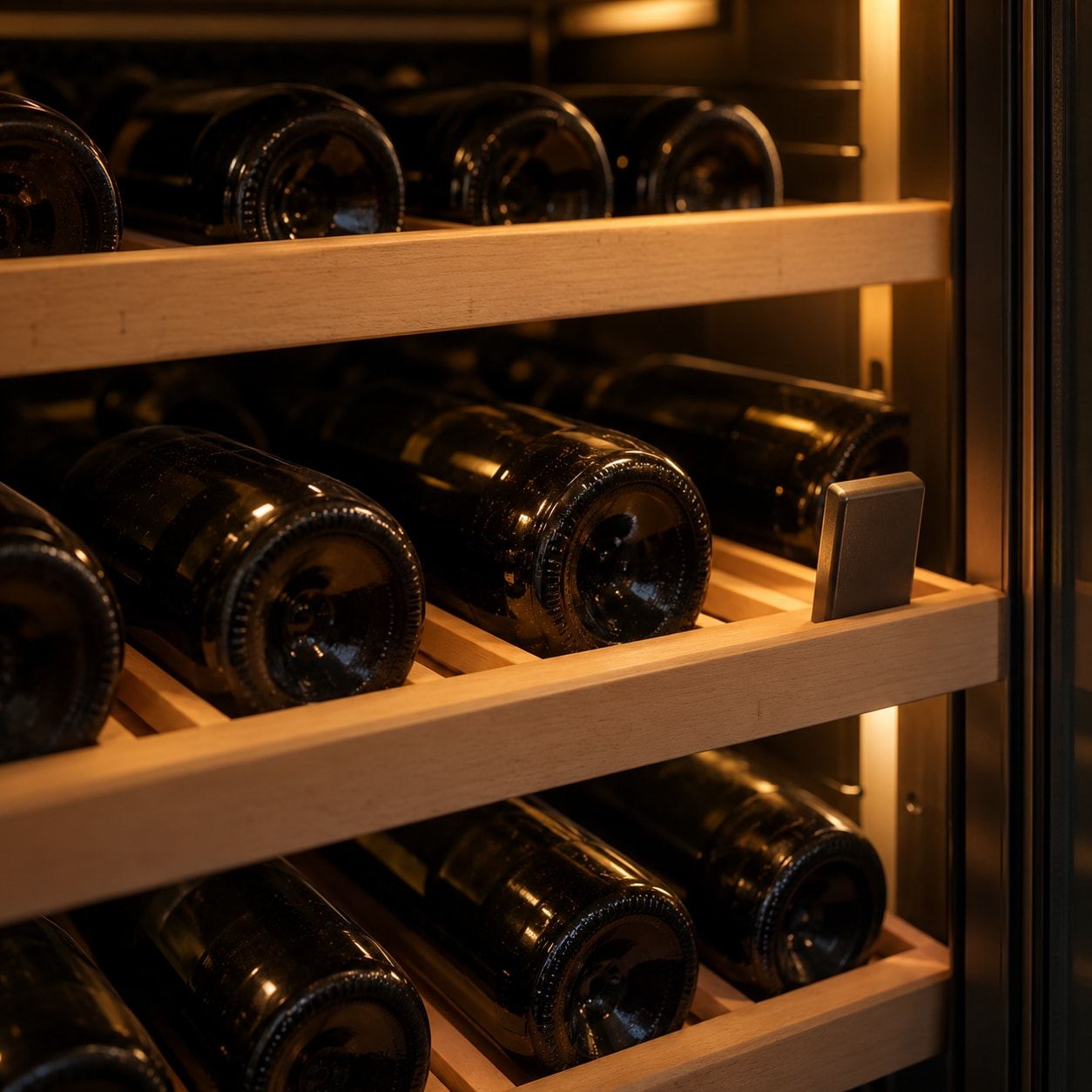
- Constant vibration disturbs sediment and is widely considered harmful to wines kept for years. Sub-Zero mounts the compressor to damp it, but those mounts wear and units shift out of level. We check both, and also whether the cabinet is touching something that transmits movement.
- Do you service Sub-Zero wine columns and larger built-in units?
- Yes — undercounter wine units, full-height columns and larger built-in preservation installations. If yours is part of a dedicated cellar room, the room itself is part of the diagnosis. For a bar or pantry undercounter unit, see undercounter service.
- Will you need to take the bottles out?
- Measuring and diagnosing usually happen with the collection in place. If a repair does require emptying a zone, we tell you before the work is scheduled so you can decide how the bottles are moved and where they wait.
- How much does it cost to have a wine unit looked at?
- The trip is $89, and that single charge covers every Sub-Zero appliance checked on the same visit. It is credited toward the repair, and the repair is priced after diagnosis, before any work. See pricing, or plan regular checks through seasonal care.