Sub-Zero serviceBuilt-in refrigerators
Bringing an older Sub-Zero refrigerator back to steady cold
When the fresh-food side of a built-in Sub-Zero starts drifting warm, the part that quit is rarely the whole story. We read the complete cooling system — compressor, sealed circuit, airflow, gaskets, controls — before recommending anything. A single $89 trip charge covers every Sub-Zero appliance we inspect during that call.
4.9 of 5 · 187 client reviews How we are rated
One side warm, the other side fine
Why is my Sub-Zero refrigerator not cooling when the freezer is still cold?
Many built-in Sub-Zero models, those with dual refrigeration, run two separate cooling systems, with one compressor and evaporator for fresh food and another for frozen. So a healthy freezer beside a warming refrigerator sends us straight to the fresh-food circuit: a stalled fan, a clogged condenser, a sensor or control fault, a tired gasket or a sealed-system problem. Leave the doors closed and phone us.
Signs a built-in Sub-Zero is wearing down
Aging built-ins seldom quit overnight. They drop hints for weeks, and every hint narrows the search.
- The fresh-food side creeps a few degrees warmer every few days
- Condenser coils packed with dust, a tired evaporator fan or a sensor reading low — the system keeps working and keeps losing ground
- The compressor hums for hours and never seems to rest
- The unit cannot reach its set point: refrigerant lost to a leak, a restriction in the circuit, a gasket letting kitchen air through, or a control that keeps calling for cold
- Beads of water on the cabinet face, or frost sheeting the rear panel
- Humid kitchen air slipping past a flattened gasket, or a defrost problem leaving the evaporator iced over and starved of airflow
- Top shelf feels cold, crisper drawers feel lukewarm
- Air is not circulating: a blocked return path, a slow fan motor or a damper that has stopped moving
- The door drifts open or needs a firm push to latch
- A gasket that has lost its shape, or hinges sagging under a heavy cabinet panel Related service
- Display goes blank, flickers or resets on its own
- Control board, user interface or a loose harness; on the oldest units, a mechanical thermostat that has simply worn out
- The freezer section is slipping too
- Then something both sides share may be involved — power, controls or the installation itself Related service
How a restoration visit runs
Restoration means we look at the refrigerator as one machine, not as the single part that happens to be failing today. That is the difference between a repair that holds and a callback next season.
-
Whole-system diagnosis
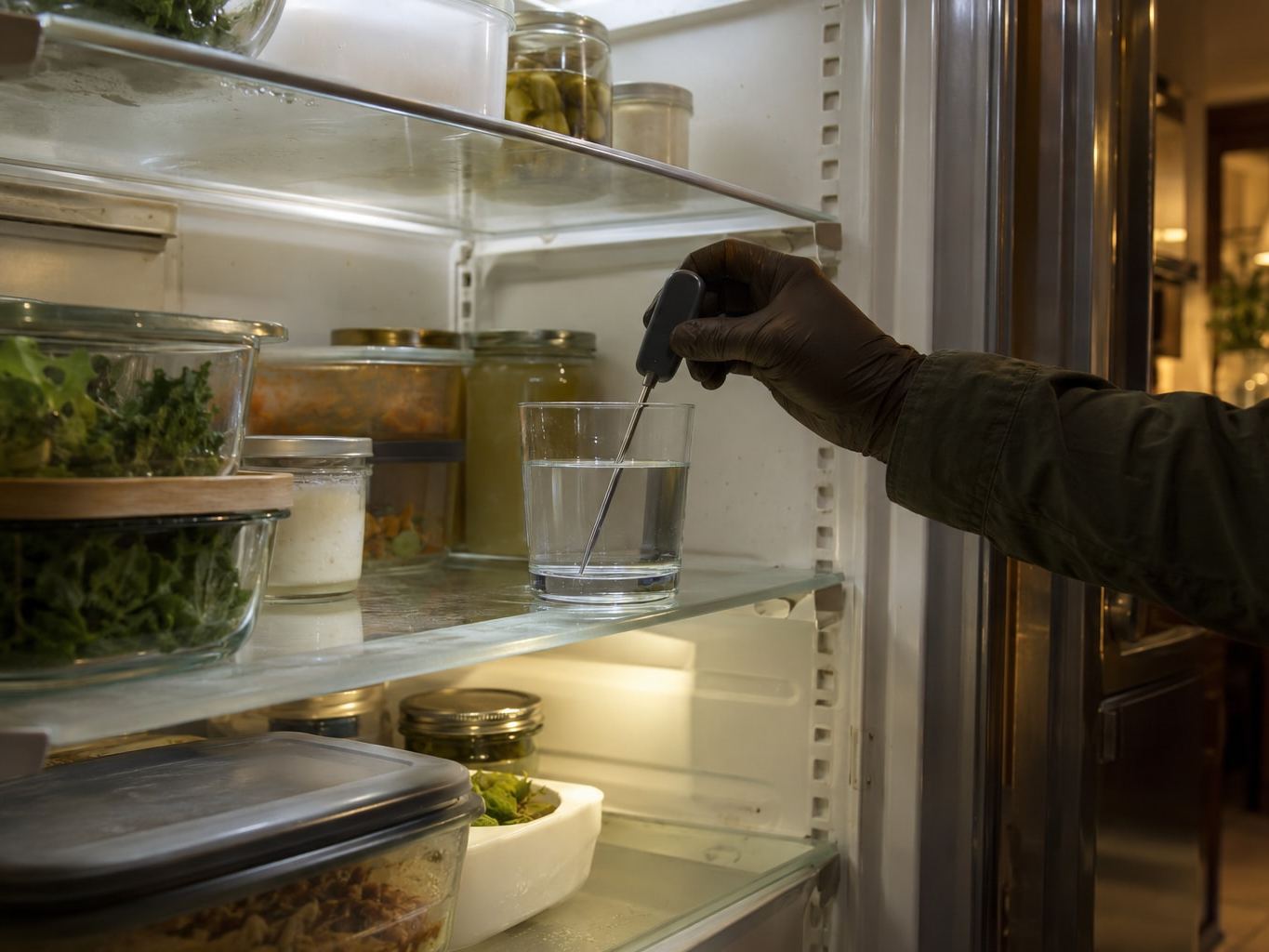
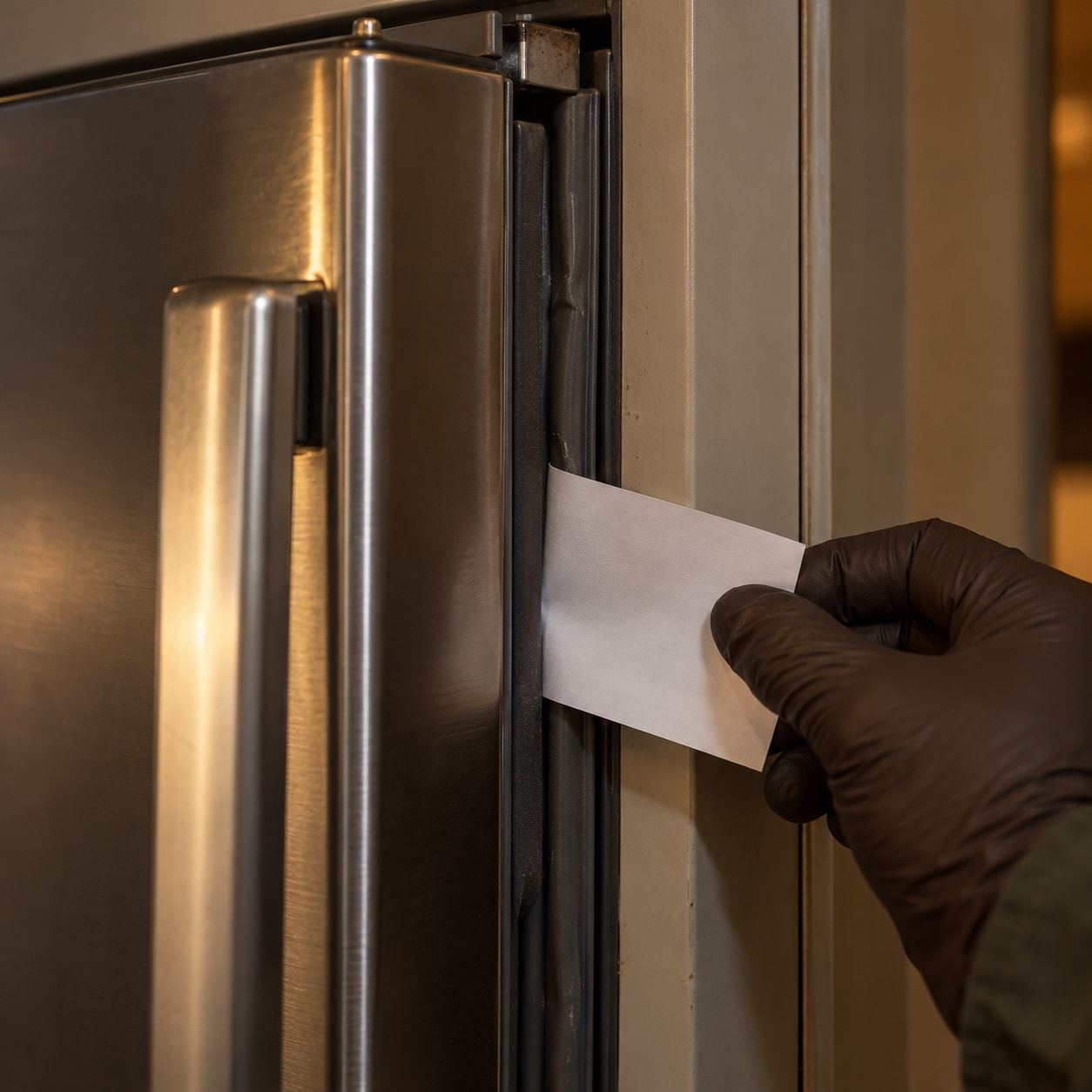
We log temperatures in each zone, watch how the compressor starts and cycles, check the condenser and both fans, test the door seal all the way around and read the controls. The opening matters as much as the machine: a built-in that cannot breathe will never hold temperature.
-
Findings and price before any work
We walk you through it in plain language: what is failing now, what is wearing but can wait, and what is fine. The repair is priced in full before a single part comes out, and the $89 trip charge is subtracted from that total when you approve the work.
-
The repair itself
Fans, relays, sensors, gaskets, controls or sealed-system work — whatever the diagnosis called for, nothing that it did not. Cabinetry and floors around the unit are covered before we start.
-
Pull-down and verification
We let the refrigerator come back down to temperature and measure each zone again, then recheck the door seal. A repair is finished when the numbers say so, not when the part is in.
-
Written report
You keep a written summary of what we found, what we did and what we recommend watching next. It is useful the next time anyone services the unit, and when you decide how much more to invest in an older one.
Is it worth restoring a vintage Sub-Zero 500 series?
Often it is, provided the cabinet, insulation and sealed system are sound. Many problems on older Sub-Zero built-ins are individual components such as fans, relays, thermostats and gaskets. The case weakens when the sealed system needs major work and parts are hard to source. We tell you which side your unit falls on after the inspection — see also restore or replace.
Fix one part, or restore the circuit?
Two very different jobs hide behind the same complaint. Which one you need depends on what the diagnosis finds, not on the age printed on the rating plate.
Component repair
- One part has failed: a fan motor, start relay, sensor, control board or gasket
- The sealed refrigerant circuit is tight and holding its charge
- Usually finished on the spot once the part is in hand
- Makes sense on almost any Sub-Zero worth keeping
Sealed-system restoration
- The circuit itself is at fault — refrigerant escaping, a blockage inside the tubing, or a compressor that has stopped pumping
- Involves opening the system, repairing, evacuating and recharging it
- A larger job that is planned and priced separately after diagnosis
- Worth it when the cabinet, insulation and doors are still in good shape
Either way, you know the exact cost before work starts, and you decide. If the numbers point toward replacement, we say so.
Sub-Zero lines and where we start looking
Each family of Sub-Zero built-ins has its own habits. The model guide covers the lines in more depth; this is the short version from the service side.
| Line | How it is built | What we check first |
|---|---|---|
| Classic Series | Built-in, 36- and 48-inch widths, dual refrigeration, stainless or panel-ready, LED lighting | Condenser behind the top grille, door gaskets, evaporator fans, sensors and control board |
| Designer Series | Panel-ready and flush with the cabinetry, Wi-Fi, variable-speed compressors, air purification, soft-close drawers | Hinge load from heavy panels, airflow around a flush installation, electronic controls and how the compressor ramps |
| Pro Series | Stainless with professional-style handles, 36-inch, 48-inch and wider | Door closers and hinges on heavy doors, gaskets, condenser cleanliness |
| Legacy and vintage, including the 500 series | Built-ins going back to the 1980s, often with mechanical controls | Thermostat, start relay, fan motors, gasket fit, sealed-system condition and whether parts can be sourced |
When the compressor never stops
Why is my Sub-Zero compressor running but the refrigerator is warm?
A compressor that runs nonstop while the fresh-food side warms up is moving heat poorly. Typical culprits: condenser coils matted with dust, a fan that quit on either the condenser or the evaporator side, an evaporator iced solid because defrost failed, or refrigerant escaping through a leak. Keep the doors closed and book a diagnosis before the compressor overheats.
Restoration questions from owners
- Can you work on a Sub-Zero built in the 1980s?
- Yes. We service older built-ins, including the vintage 500 series. The question with the oldest units is usually parts, not skill, so we confirm what can be sourced before we recommend a repair.
- How much does a Sub-Zero refrigerator restoration cost?
- Coming out costs $89 — once per trip, even if three Sub-Zero appliances get looked at — and that amount comes off the repair bill. What the work itself costs depends entirely on the diagnosis, so the number is given once we have inspected the unit and before any part is swapped. See how we price repairs.
- My refrigerator is behind a wood panel. Will you damage the cabinetry?
- Surrounding cabinetry and floors are covered before work starts. Most diagnosis happens without removing the panel; if a panel does have to come off, we explain why first and only do it with your agreement.
- Do I get anything in writing after the repair?
- Yes. You get a written report with the findings, the work done and what we recommend watching. Keep it with the kitchen paperwork — it saves time on every future visit.
- What should I do with the food until you arrive?
- Leave both doors shut: a well-stocked Sub-Zero stays at a safe temperature for several hours if nobody opens it. If it already feels warm inside, shift milk, fish and meat into an ice chest. Calls are answered 24/7; service visits run daily, 8 AM–6 PM. If water or a burning smell is involved, read the emergency steps.
- Can you check my wine unit and freezer on the same visit?
- Absolutely — the $89 charge is per trip, not per appliance, so checking every Sub-Zero in the house costs nothing extra to come out. Mention each unit when you book so the technician arrives prepared.